
What are Large Language Models (LLMs)?
A large language model is a type of artificial intelligence algorithm that applies neural network techniques with lots of parameters to process and understand human languages or text using self-supervised learning techniques. Tasks like text generation, machine translation, summary writing, and image generation from texts, machine coding, chat-bots, or Conversational AI are applications of the Large Language Model. Examples of such LLM models are Chat GPT by open AI, BERT (Bidirectional Encoder Representations from Transformers) by Google, etc.
What is LLM Inferencing?
LLM inferencing refers to the process of using a pre-trained Large Language Model (LLM) to generate outputs or predictions for a given input. It involves running the model in inference mode, where it takes user-provided text (or other input) and produces an appropriate response or result without modifying the model's learned parameters.
The LLM Inference API contains the following key features:
1. Text-to-text generation - Generate text based on an input text prompt.
2. LLM selection - Apply multiple models to tailor the app for your specific use cases. You can also retrain and apply customized weights to the model.
LoRA support - Extend and customize the LLM capability with LoRA model either by training on your all dataset or taking prepared prebuilt LoRA models from the open-source community (not compatible with models converted with the AI Edge Torch Generative API).
Key Steps in LLM Inferencing
Input Tokenization:
The raw text input is tokenized into smaller units (tokens) using a tokenizer associated with the LLM. Tokens are typically numerical representations that the model can process.
Model Processing:
The tokenized input is passed through the model, which uses its pre-trained parameters to analyze the input and compute predictions. The output is usually in the form of probabilities for the next possible tokens or a structured output, depending on the task.
Decoding:
The output tokens are decoded back into human-readable text. This step often involves strategies like:
Greedy decoding: Selecting the token with the highest probability at each step.
Beam search: Exploring multiple possible sequences to find the most probable one.
Sampling: Introducing randomness to generate diverse outputs.
Post-Processing:
Additional steps like formatting, summarizing, or structuring the model's response to suit the specific use case.
Use Cases of LLM Inferencing
Text Generation: Creating coherent and contextually relevant text based on a given prompt.
Question Answering: Responding to specific questions using context or knowledge encoded in the model.
Summarization: Condensing a long passage into a shorter, meaningful summary.
Translation: Converting text from one language to another.
Code Generation: Writing code snippets based on input descriptions.
Sentiment Analysis: Determining the sentiment expressed in a piece of text.
Components Involved in Inferencing
Pre-Trained LLM:
Examples include GPT, BERT, LLaMA, Falcon, or Qwen.
These models are pre-trained on large datasets and fine-tuned for specific tasks.
Frameworks:
Tools like Hugging Face Transformers, OpenAI API, or LangChain help streamline inferencing workflows.
Hardware:
Inferencing is computationally intensive, especially with large models. GPUs or TPUs are commonly used for faster processing.
Challenges in LLM Inferencing
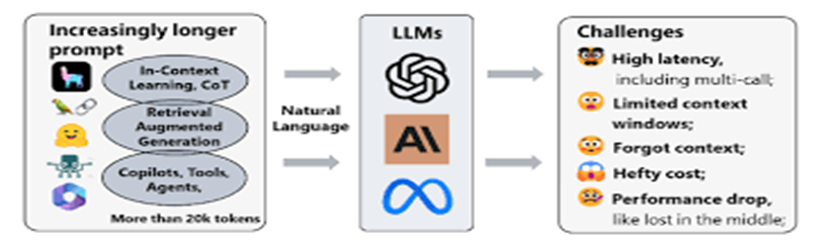
Latency:
Large models require significant computation, leading to delays in response times.
Resource Requirements:
Inferencing requires powerful hardware, particularly for very large models (e.g., 65B or 175B parameters).
Token Limit:
LLMs have a fixed maximum token limit for inputs and outputs, which can constrain inferencing for large documents.
Cost:
Running inference on large-scale models can be expensive due to hardware and energy demands.
Energy Consumption:
o The computational requirements for inferencing are energy-intensive, raising concerns about environmental sustainability.
Context Management:
o LLMs have context length limitations, which may hinder their ability to process or generate very long inputs and outputs effectively.
Scalability:
o Serving millions of inference requests simultaneously demands robust infrastructure and optimization strategies.
Key Metrics for Evaluating LLM Inference
1. Latency:
Definition: The time it takes to generate a response.
Components:
Time to First Token (TTFT): Time to start the response.
Time Per Output Token (TPOT): Time to generate each token after the first.
Importance: Critical for real-time use cases like chatbots and translation.
2. Throughput:
Definition: How many requests or tokens can be processed in a given time?
Measurements:
Requests per second: For handling many users.
Tokens per second: For measuring model efficiency.
Importance: Useful for applications with high user demand.
Optimizing LLM Inference
1. KV Caching
What it is: Saves intermediate calculations during inference for reuse, avoiding redundant computations.
Why it matters: Reduces latency, improves throughput, and optimizes memory usage, depending on your hardware's memory and data transfer speed.
2. Operator Fusion
What it is: Combines multiple operations into one step to reduce memory access and computational overhead.
Why it matters: Speeds up inference and improves cache utilization.
3. Parallelization
What it is: Uses parallel processing to handle computations more efficiently.
Techniques include:
Speculative Inference: Pre-generate tokens to reduce waiting time.
Block wise Decoding: Process parts of the input in parallel.
Pipeline Parallelism: Split inference into stages to keep hardware busy.
Tensor/Sequence Parallelism: Spread computations across devices.
Why it matters: Improves speed and resource use.
4. Batching
What it is: Processes multiple inputs at the same time.
Techniques include:
Traditional Batching: Process fixed-size input batches.
Dynamic Batching: Group inputs of varying sizes dynamically.
Trade-off:
Small batches = lower latency but less throughput.
Large batches = higher throughput but more latency.
Why it matters: Balances speed and efficiency based on your needs.
These techniques collectively enhance LLM performance, balancing latency, throughput, and resource usage for different scenarios.
Optimizations for Efficient LLM Inferencing
Quantization:
Reducing model precision (e.g., using int8 or bfloat16) to decrease memory and compute costs.
Pruning:
Removing less important parts of the model to make it lighter and faster.
Distillation:
Using a smaller "student" model trained to mimic the behavior of a larger model.
Caching:
Storing intermediate results to avoid redundant computations in interactive applications.
Batch Processing:
Processing multiple inputs simultaneously to maximize GPU utilization.
Sparse Architectures:
o Adopting models that activate only relevant parts of the network for each inference, reducing unnecessary computation.
Hardware Acceleration:
o Using specialized hardware like GPUs, TPUs, and FPGAs to expedite matrix computations.
Why Optimizing LLM Inference Matters
Large models like GPT or Falcon are powerful but resource heavy. Optimizing inference helps:
Reduce Costs: By using less computational power.
Increase Speed: For faster responses in real-time applications.
Improve Scalability: To handle more users simultaneously.
This makes LLMs practical for diverse applications, from chatbots to complex enterprise solutions.
Transformer-Based LLM Model Architectures
Transformer-based models, which have revolutionized natural language processing tasks, typically follow a general architecture that includes the following components:
1. Input Embeddings: The input text is tokenized into smaller units, such as words or sub-words, and each token is embedded into a continuous vector representation. This embedding step captures the semantic and syntactic information of the input.
2. Positional Encoding: Positional encoding is added to the input embeddings to provide information about the positions of the tokens because transformers do not naturally encode the order of the tokens. This enables the model to process the tokens while taking their sequential order into account.
3. Encoder: Based on a neural network technique, the encoder analyses the input text and creates a number of hidden states that protect the context and meaning of text data. Multiple encoder layers make up the core of the transformer architecture. Self-attention mechanism and feed-forward neural network are the two fundamental sub-components of each encoder layer.
1. Self-Attention Mechanism: Self-attention enables the model to weigh the importance of different tokens in the input sequence by computing attention scores. It allows the model to consider the dependencies and relationships between different tokens in a context-aware manner.
2. Feed-Forward Neural Network: After the self-attention step, a feed-forward neural network is applied to each token independently. This network includes fully connected layers with non-linear activation functions, allowing the model to capture complex interactions between tokens.
4. Decoder Layers: In some transformer-based models, a decoder component is included in addition to the encoder. The decoder layers enable autoregressive generation, where the model can generate sequential outputs by attending to the previously generated tokens.
5. Multi-Head Attention: Transformers often employ multi-head attention, where self-attention is performed simultaneously with different learned attention weights. This allows the model to capture different types of relationships and attend to various parts of the input sequence simultaneously.
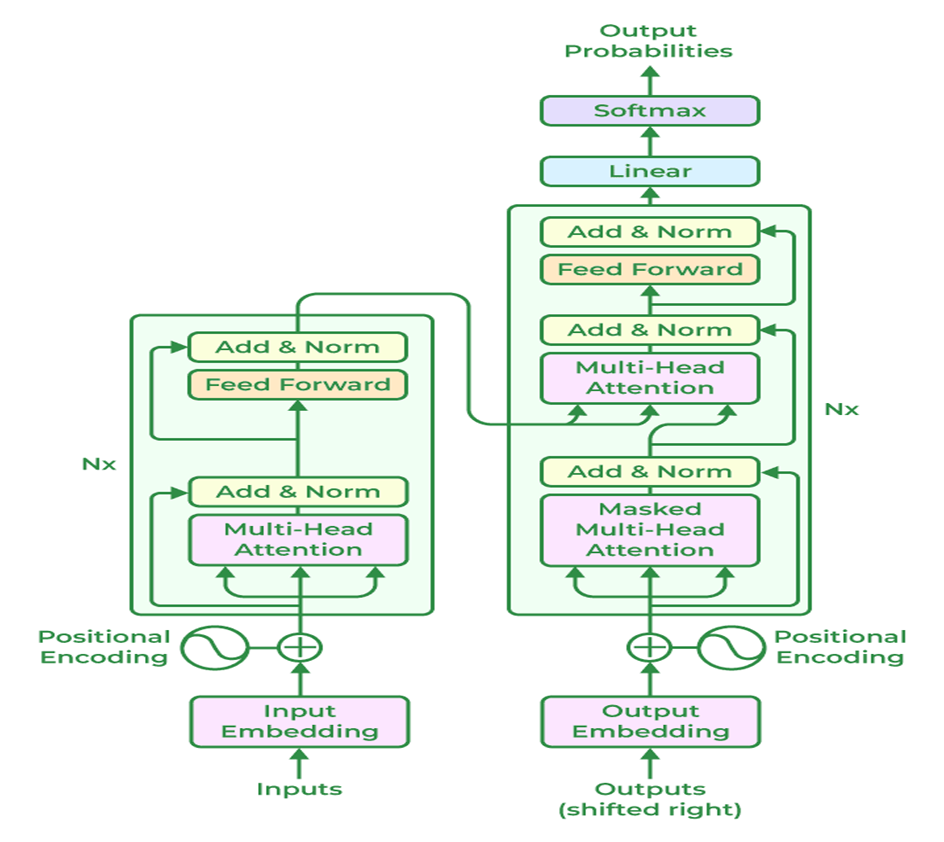
6. Layer Normalization: Layer normalization is applied after each sub-component or layer in the transformer architecture. It helps stabilize the learning process and improves the model’s ability to generalize across different inputs.
7. Output Layers: The output layers of the transformer model can vary depending on the specific task. For example, in language modeling, a linear projection followed by SoftMax activation is commonly used to generate the probability distribution over the next token.
How LLM Inference Works
LLM inference is the process through which large language models (LLMs) generate human-like responses to user prompts by predicting the most likely sequence of words. It happens in two main phases:
1. Prefill Phase
Input Processing:
The user's input is broken into smaller pieces called tokens (e.g., words or parts of words).
These tokens are converted into numerical values the model can process.
2. Decode Phase
Response Generation:
The model predicts the next token (word/part of a word) based on the user's input and its trained knowledge.
It repeats this step, predicting one token at a time, until the response is complete.
The generated tokens are then decoded back into readable text for the user.
Transformer Basics for Text Generation
A Transformer-based decoder generates text by processing input tokens to predict the next token.
Here's a breakdown of the process:
Key Components:
1. Decoder Outputs Logits:
The decoder produces logits (one for each vocabulary token) rather than tokens directly.
A Language Model (LM) head is the final layer that outputs these logits.
2. Decoding Strategies:
Transform logits into tokens using strategies like:
Greedy Decoding: Select the token with the highest logit.
Sampling Decoding: Treat logits as probabilities, sampling tokens with modifications like temperature scaling, top-k, or top-p.
Beam Search and Contrastive Decoding: Use more sophisticated heuristics.
3. Execution Engine:
For practical purposes, decoding strategies are often integrated into the model as part of the inference engine.
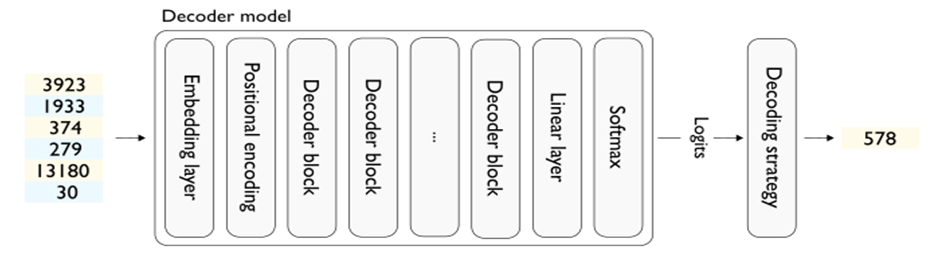
Figure 1 —Outline of a Transformer decoder model
Phases of Text Generation
1. Initiation Phase (Pre-fill Phase):
Goal: Generate the first token.
Steps:
Load model weights onto GPU.
Tokenize the prompt on CPU, transfer tokens to GPU.
Run the tokenized prompt through the network to produce the first token.
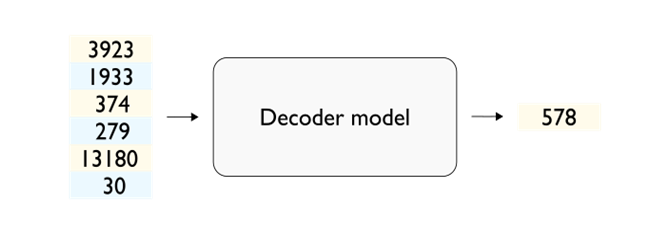
Figure 2 — an overly simplified Transformer decoder model
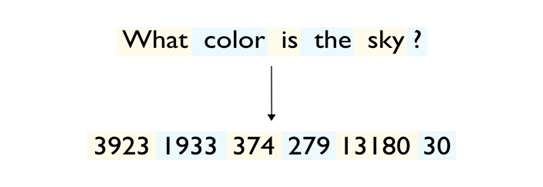
Figure 3 — Tokenization step
2. Generation Phase (Decoding/Auto-Regressive Phase):
Goal: Generate subsequent tokens iteratively.
Steps:
Append the first generated token to the input sequence.
Use the updated sequence to predict the next token.
Repeat until either an end-of-sequence (EOS) token is generated or a maximum sequence length is reached.
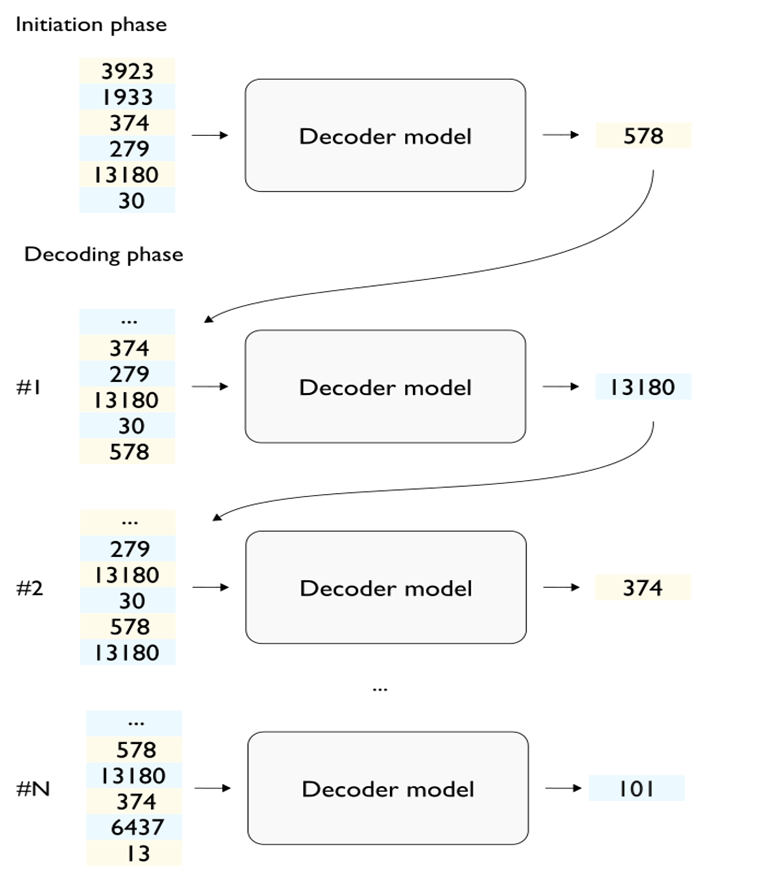
Figure 4 — Initiation and decoding phases of the token generation process
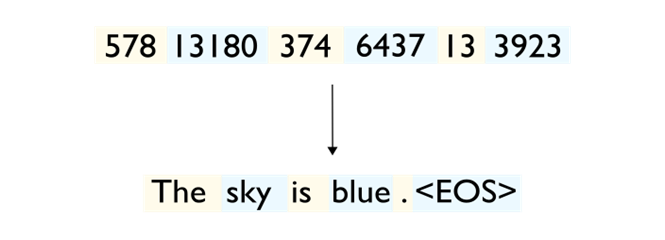
Figure 5 — Detokenization step
Advanced Techniques
Recent approaches like speculative sampling or lookahead decoding improve latency but deviate from the standard algorithm.
Difference between Phases
The initiation phase is essentially the first iteration of the decoding loop. Afterward, the process continues iteratively in the generation phase, where the input grows with each new token.
Applications of LLM Inferencing
- Customer Support: Automated chatbots powered by LLMs offer real-time support and guidance.
- Code Generation: Models like GitHub Copilot assist developers by generating code snippets based on prompts.
- Healthcare: LLMs provide medical professionals with quick insights from vast datasets and assist in drafting reports.
- Education: AI tutors use inferencing to personalize learning experiences for students.
Future Directions
1. Edge Inferencing: Deploying LLMs on edge devices to reduce reliance on cloud infrastructure and improve latency.
2. Adaptive Models: Systems capable of dynamically adjusting model complexity based on the input's complexity.
3. Federated Inferencing: Securely distributing inferencing tasks across decentralized systems to enhance privacy and scalability.
4. Sustainability Initiatives: Exploring more energy-efficient hardware and algorithms to reduce carbon footprints.
Example
Install Dependencies
Python code
! pip install transformers
This command installs the transformers library from Hugging Face, which is used to load pre-trained language models and perform various NLP tasks.
Import Libraries
Python code
from transformers import AutoTokenizer, AutoModelForCausalLM
import transformers
import torch
AutoTokenizer: AutoTokenizer is a generic tokenizer class that will be instantiated as one of the base tokenizer classes when created with the AutoTokenizer.They break down text into smaller units called tokens.
AutoModelForCausalLM: Loads a causal language model for text generation tasks.
Transformers: The main library containing tools for working with NLP models.
Torch: PyTorch, used for handling tensors and model operations.
Load the Falcon Model
Python code
model = "tiiuae/falcon-7b-instruct"
tokenizer = AutoTokenizer.from_pretrained (model)
Model: Specifies the Hugging Face model name, here "tiiuae/falcon-7b-instruct", which a fine-tuned version of the Falcon 7B model designed for instruction is following.
Tokenizer: Loads the tokenizer associated with the model. The tokenizer breaks text into tokens that the model can understand.
Define Text Generation Pipeline
Python code
falcon_pipeline = transformers.pipeline ("text-generation",
model=model,
tokenizer=tokenizer,
torch_dtype=torch.bfloat16,
trust_remote_code=True,
device_map="auto"
)
pipeline ("text-generation"): A utility to create an end-to-end pipeline for text generation tasks.
model: Specifies the model to be used.
tokenizer: Specifies the tokenizer for processing input text.
torch_dtype=torch.bfloat16: Uses bfloat16, a lightweight floating-point precision for faster inference.
trust_remote_code=True: Allows running model-specific code hosted on Hugging Face.
device_map="auto": Automatically assigns computation to available GPUs (if any) or falls back to CPU.
Define Completion Function
Python code
def get_completion_falcon (input):
system = f"""
You are an expert Physicist.
You are good at explaining Physics concepts in simple words.
Help as much as you can.
"""
prompt = f"#### System: {system}\n#### User: \n{input}\n\n#### Response from falcon-7b-instruct:"
print(prompt)
system: Defines the role and behavior of the model, acting as an instruction to guide responses.
prompt: Combines the system message and user input into a structured format. The use of prefixes (#### System, #### User, #### Response) ensures consistency in the model's interpretation.
print(prompt): Displays the constructed prompt for debugging or inspection.
Python code
falcon_response = falcon_pipeline (prompt,
max_length=500,
do_sample=True,
top_k=10,
num_return_sequences=1,
eos_token_id=tokenizer.eos_token_id,
)
return falcon_response
falcon_pipeline (prompt): Sends the prompt to the Falcon model for generation.
max_length=500: Limits the maximum token length of the response.
do_sample=True: Enables sampling to allow diverse outputs.
top_k=10: Considers only the top 10 tokens by probability at each step, reducing randomness.
num_return_sequences=1: Generates a single response.
eos_token_id=tokenizer.eos_token_id: Specifies the end-of-sequence token for proper termination of responses.
Test the Model
Python code
prompt = "Explain to me the difference between nuclear fission and fusion."
# prompt = "Why is the Sky blue?"
response = get_completion_falcon (prompt)
print (response [0]['generated_text'])
prompt: User-provided input text to query the model.
response: The output of the get_completion_falcon function, containing generated text.
response[0]['generated_text']: Extracts and prints the text portion of the generated output.
Sample Output
If the user prompt is “Explain to me the difference between nuclear fission and fusion.” the model would generate a detailed response explaining the concepts of nuclear fission and fusion in simple terms.
1. Transformers: The Foundation of LLM Inferencing
The Hugging Face Transformers library is one of the most widely used frameworks for working with pre-trained models. It provides a seamless interface for hundreds of models across various modalities, including text, vision, and multimodal.
Key Features for Inference
Ease of Use: With a few lines of code, you can load and perform inference with models like GPT, BERT, and T5.
Customization: Transformers allow you to fine-tune models and optimize inference pipelines for specific tasks.
Integration: It supports integration with deep learning frameworks such as PyTorch and TensorFlow.
Example
Python codefrom transformers import AutoModelForCausalLM, AutoTokenizer # Load model and tokenizermodel_name = "gpt2"tokenizer = AutoTokenizer.from_pretrained(model_name)model = AutoModelForCausalLM.from_pretrained(model_name) # Inferenceinput_text = "What is the capital of France?"inputs = tokenizer(input_text, return_tensors="pt")outputs = model.generate(**inputs, max_length=50)print(tokenizer.decode(outputs[0], skip_special_tokens=True))
2. VLLM: High-Performance Inferencing
VLLM is an inference-optimized framework specifically designed to enhance the throughput of LLMs. It achieves this through continuous batching, which dynamically groups incoming requests to maximize GPU utilization, reducing latency without sacrificing model performance.
Advantages
High Throughput: Optimized for handling multiple concurrent requests efficiently.
Memory Management: Leverages advanced memory optimization techniques to minimize GPU memory consumption.
Ease of Integration: Compatible with popular LLMs and integrates well into existing pipelines.
Use Case
VLLM is ideal for serving LLMs in production environments with high traffic, such as chatbot applications or real-time recommendation systems.
Example
Python codefrom vllm import LLM, SamplingParams # Initialize the modelllm = LLM(model="gpt-3.5-turbo") # Perform inference with optimized batchingoutputs = llm.generate( ["Tell me a joke.", "Explain gravity in simple terms."], SamplingParams(temperature=0.7, max_tokens=100))for output in outputs: print(output.text)VLLM's dynamic batching ensures that even with multiple simultaneous requests, the inference remains efficient and responsive.
3. LangChain: Orchestrating LLM Workflows
LangChain is a framework designed to enhance the capabilities of LLMs by chaining together models, tools, and memory. It simplifies the development of applications that require complex reasoning, tool usage, or multi-step workflows.
Core Features
Agent-Based Systems: LangChain provides tools to build agents that can reason and use external tools (e.g., APIs, databases).
Memory Management: Incorporates memory to maintain context across interactions.
Workflow Automation: Enables chaining of tasks, such as summarization followed by question answering.
Example
Imagine you are building a conversational agent that retrieves information from a database and generates a summary.
Python codefrom langchain.llms import HuggingFaceHubfrom langchain.chains import LLMChainfrom langchain.prompts import PromptTemplate # Initialize the modelllm = HuggingFaceHub(repo_id="gpt-3.5-turbo", model_kwargs={"temperature": 0.7}) # Define a prompt templatetemplate = "Summarize the following for me: {text}"prompt = PromptTemplate(template=template, input_variables=["text"]) # Create a chainchain = LLMChain(llm=llm, prompt=prompt) # Run the chainsummary = chain.run("The Eiffel Tower is located in Paris, France...")print(summary)LangChain excels in combining multiple steps or tools into a cohesive system, making it perfect for complex inferencing workflows.
Conclusion
LLM inferencing is at the heart of the AI revolution, enabling models to interact meaningfully with humans. While the challenges of cost, scalability, and energy consumption persist, advancements in optimization techniques and hardware are paving the way for more efficient and accessible inferencing solutions. As LLMs continue to grow in sophistication, their inferencing capabilities will play a pivotal role in defining the future of AI applications.
LLM inferencing is also the practical application of pre-trained language models to perform tasks like text generation, answering questions, and more. It leverages the model's learned representations to generate useful and relevant outputs for various applications.